Species, Ethnicity, and Why Race Doesn’t Exist in My World
I understand the instinct. When people encounter an anthropomorphic world populated by wolves, lions, foxes, and bears, the natural human tendency is to reach for a familiar framework. We know that in the real world, people look different from one another. We know that those differences have been assigned social meaning. And so, almost automatically, the mind begins sorting: which species maps to which group?
It’s an understandable impulse. It is also wrong — and the wrongness goes deeper than most people realize.
In my world, species is not race. Ethnicity is not species. And race, as a concept, simply does not exist — not because my world is naive about difference, but because the kind of difference race describes has no equivalent here. To understand why, we need to look at how identity actually works in my world, and why the real world’s geography makes the race allegory collapse before it can even get started.
The Scale Problem
The first issue with mapping species to race is purely mathematical.
Human racial categories — whatever their social construction — number in the handful. Anthropomorphic worlds built on carnivorous species alone involve roughly 74 or more distinct species, many of them native to multiple continents simultaneously. To construct a coherent racial allegory across that many species is not just difficult. It is impossible.
Which race is a striped hyena? Which race is a wolverine? Which race is a clouded leopard? The question is not just unanswerable — it is the wrong question entirely. The framework that produces it was never designed for this kind of world, and forcing it onto one produces nonsense, not insight.
A Species Is Not a Place
The second problem is geographic. The race allegory only works if you can tie a species to a specific region of the world — if wolves “mean” one thing and lions “mean” another, geographically and culturally. But that’s not how species distribution works.
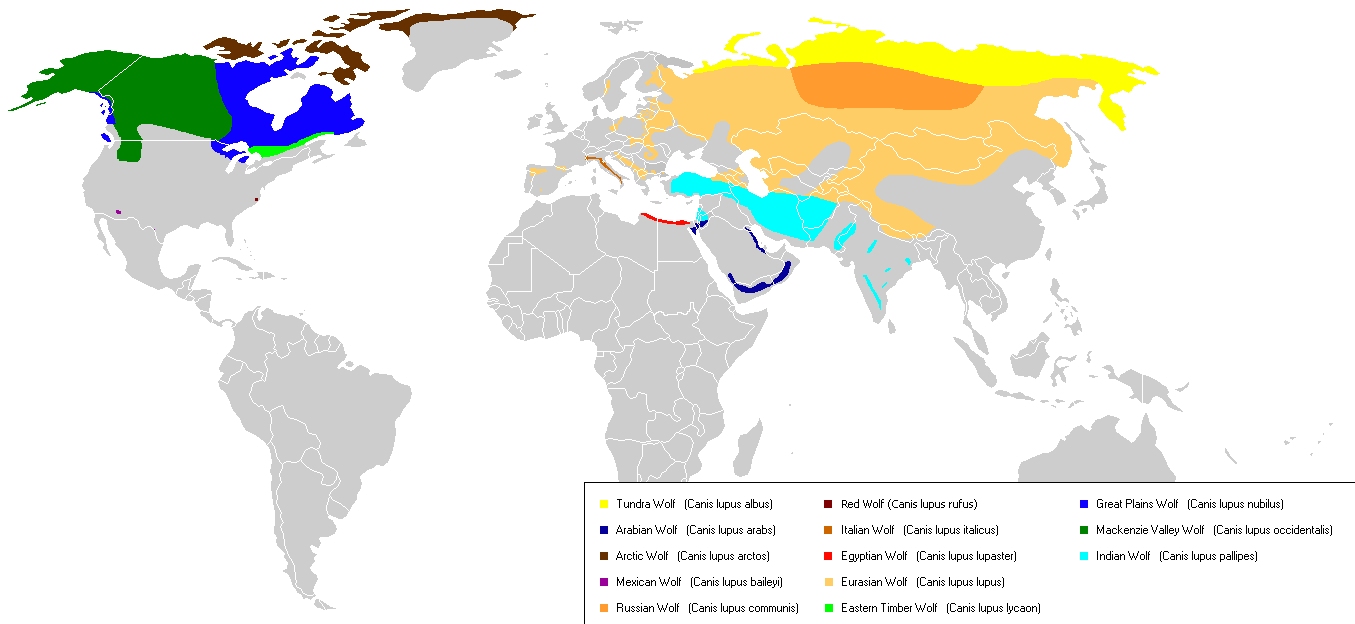
Consider the gray wolf. Its historical range spans North America, Europe, the Middle East, Central Asia, and as far east as Japan. It is one of the most widely distributed land mammals on earth. There is no continent, no culture, no hemisphere that “owns” the wolf.
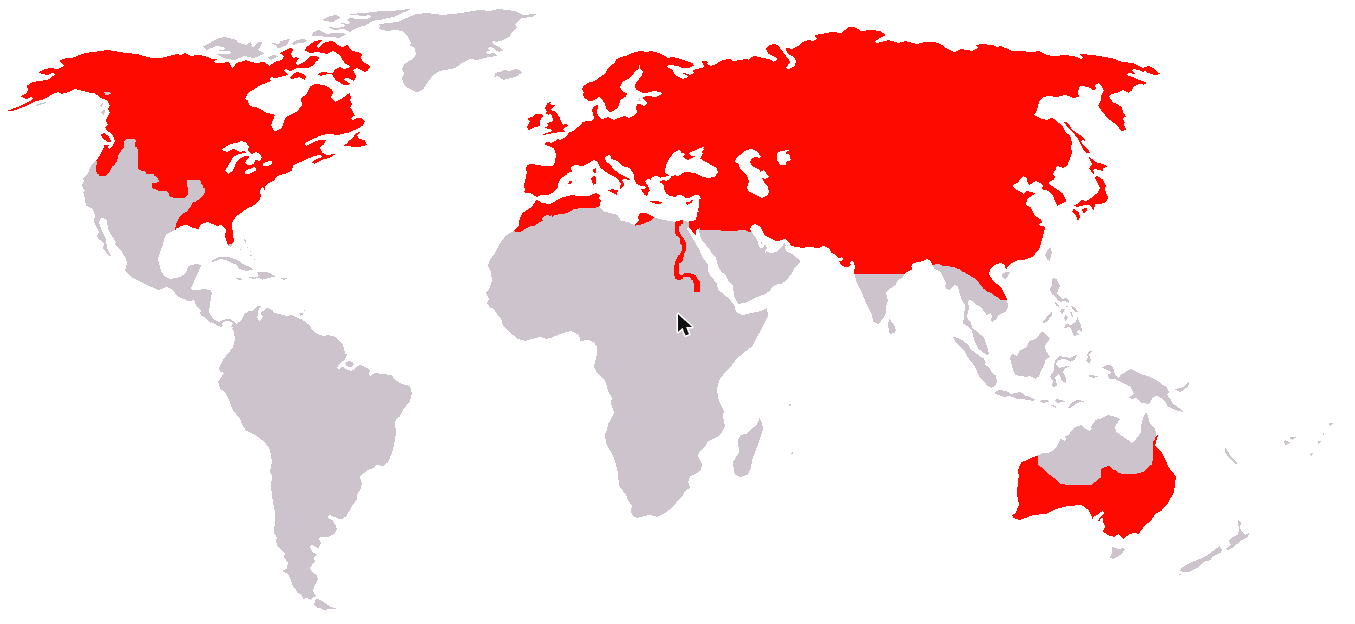
The red fox is equally global. Its range covers North America, Europe, Asia, North Africa — and it has been introduced to Australia. You cannot look at a fox and know where it is from any more than you can look at a sparrow and determine its nationality.
This is not a technicality. It is the heart of the matter. In my world, you cannot look at a Lupenite — a wolf-person — and determine where they are from. You cannot look at a Vulpen — a fox-person — and peg their background. To know who someone is, you have to know them. That is not a flaw in the system. That is exactly how it should be.
The Barbary Lion, for instance, is the subspecies native to North Africa and Southern Europe. Its fur was slightly darker, its mane larger and denser than its African counterparts. But most people, encountering a Barbary Lion and an African Lion side by side, would not immediately spot the difference. They would see a lion. They would have to learn more — to ask, to listen, to get to know the person — before they understood where that individual came from. This is not a problem to solve. This is a feature of a world that takes identity seriously.
Fur Color Is Hair Color, Not Skin Color
Over the years, I have been asked variations of the same question more times than I can count: “Do black-furred animals in your world represent Black people?”
The answer is no — and the assumption behind the question reveals exactly the kind of surface-level thinking the race allegory produces.
In my world, fur color carries about as much identity significance as hair color does in ours. That is to say: very little, and almost none in terms of geographic or cultural origin.
Take Black Bears. Their geographic range is North America — specifically the forests of Canada and the United States. In my world, a Black Ursinian is, by default, Native American or broadly North American in background. The black fur tells you nothing about African heritage. It tells you about North American forests.
Black-furred jaguars — what people often call panthers — are native to Mexico, Central America, and South America. A black-furred Jaguar-person in my world is, by background, Latin American. Not African. Not generically “Black.” Mexican. Peruvian. Brazilian. The fur color is following the animal’s actual geography, not a racial shorthand from our world.
And if you’re wondering about black-furred leopards or cheetahs — melanistic coat variants that occur in nature — those animals are native to Africa, the Middle East, Russia, India, and China. A black-furred Leopard-person could be Ethiopian, Saudi, Russian, or Chinese depending on their background. The fur color, again, tells you nothing about which.
Assuming that black fur automatically signals African or Black American identity is not a sophisticated reading of anthropomorphic fiction. It is, ironically, a more reductive and racially loaded assumption than anything in my worldbuilding. In my world, we simply do not make that leap — because there is no basis for it.
Three Layers: How Identity Actually Works
If species is not race, then what is it? And where does ethnicity fit?
In my world, identity is built on three distinct layers, each separate from the others:
Species — the broadest biological category. Lupenite. Leonite. Ursinian. Vulpen. This tells you what kind of person someone is in the most general sense: their physiology, their baseline biology, their place in the natural order.
Subspecies — a geographic refinement within the species. Eurasian Lupenite. Arabian Lupenite. Barbary Leonite. This reflects the real-world subspecies distributions of the animals in question, shaped by millennia of geographic separation and adaptation.
Ethnicity — cultural and national identity, within the subspecies’ geographic range. Russian. Italian. Nigerian. Japanese. This works exactly as it does in our world: it is the product of history, culture, language, and place.
These three layers are independent of each other. Knowing one does not tell you the others. And that independence is what makes the system work.
Boris Volorsky: A Worked Example
Boris Volorsky is a Lupenite — a wolf-person — who immigrated from Moscow, Russia, to New York City in 1996 with his wife Larissa and their five children.
Species: Lupenite
Subspecies: Eurasian Lupenite
Ethnicity: Russian
Now here is where the independence of these three layers becomes clear:
• Not all Russians are Lupenites. Russia is home, in the real world, to wolves, foxes, Siberian tigers, and grizzly bears — among others. In my world, that means Russian Lupenites, Russian Vulpens, Russian Tiscythians, and Russian Ursinians all exist, living together in the same cities, speaking the same language, sharing the same cultural heritage.
• Not all Eurasian Lupenites are Russian. The Eurasian wolf’s range spans from Portugal to Japan. A Eurasian Lupenite might be Portuguese, Polish, Iranian, Mongolian, or Japanese. Boris’s subspecies tells you his broad geographic origin — the Old World — but not his specific cultural home.
• Not all Russian Lupenites are Boris. Ethnicity, within those layers, still leaves room for the full complexity of individual identity — region, class, religion, family history, and the particular experience of being a Russian immigrant in Brooklyn who still sometimes orders the wrong thing at a diner.
Leo: A Second Example
Leo is a Leonite — a lion-person — of Italian and Sicilian descent, born and raised in America.
Species: Leonite
Subspecies: Barbary Leonite
Ethnicity: Italian-American
Most people, when they picture a lion, picture Africa. And lions are African — in the modern world. But the historical record tells a much wider story. Lions once roamed Southern Europe, the Middle East, India, and — in the form of the American Lion and the Cave Lion — even ancient North America. The Barbary Lion in particular was the subspecies native to North Africa and the coastal regions of Southern Europe, including the Italian peninsula and Sicily.
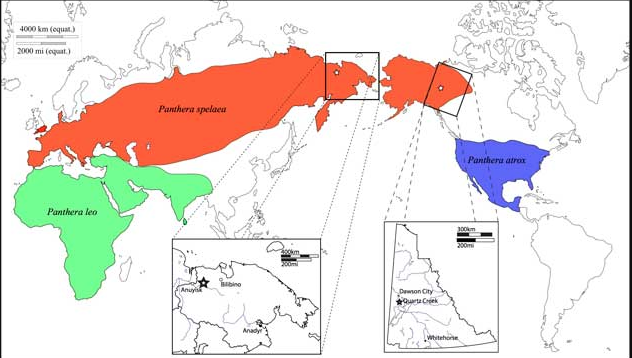
Leo’s subspecies, the Barbary Leonite, traces its genetic foundation to these ancient populations — the cave lions and Barbary lions that inhabited the Mediterranean world long before the modern era. His Italian-American ethnicity follows naturally: Southern Europe was Barbary Lion territory. His ancestors were Sicilian because lions were Sicilian — or more precisely, because the ancestors of Barbary lions ranged that region for millennia.
And again, the layers stay independent:
• Not all Leonites are African. The historical range of lion species covers Southern Europe, the Middle East, India, and the Americas. A Leonite could be Greek, Moroccan, Iranian, or Indian depending on their background.
• Not all Barbary Leonites are European. The Barbary Lion’s range included North Africa — Morocco, Algeria, Tunisia. A Barbary Leonite could just as easily be Moroccan as Italian.
• Leo is American. Born here, raised here, shaped by American culture on top of his Italian-Sicilian heritage. His subspecies and species say nothing about that. His story does.
Fantasy Doesn’t Owe You a One-to-One Parallel
There is a broader point underneath all of this, and it is worth naming directly.
It is completely acceptable — in fact, it is often better — for a fantasy world to not map cleanly onto real-world social categories. The demand that every fictional difference stand in for a real-world one is not a sign of sophistication. It is a failure of imagination. It reduces a world to a coding exercise: what does this represent? rather than what is this?
My world is not a metaphor. Leonites are not stand-ins. Lupenites are not symbols. They are people — real people within their world, with real histories, real cultures, real family arguments, and real homesickness for Moscow when the New York winter doesn’t feel like home yet.
The racial categories of our world — White, Black, Asian, and so on — do not exist in theirs. Not because the world is pretending difference doesn’t exist, but because difference there is organized along entirely different lines. Species. Subspecies. Ethnicity. And within ethnicity, everything else that makes a person who they are.
You could spend years trying to force my world into a racial allegory, and you’d produce nothing but confusion and distortion. Or you could simply meet Boris, and Leo, and the rest of them — and let them be who they are.
— Eric Flegal